
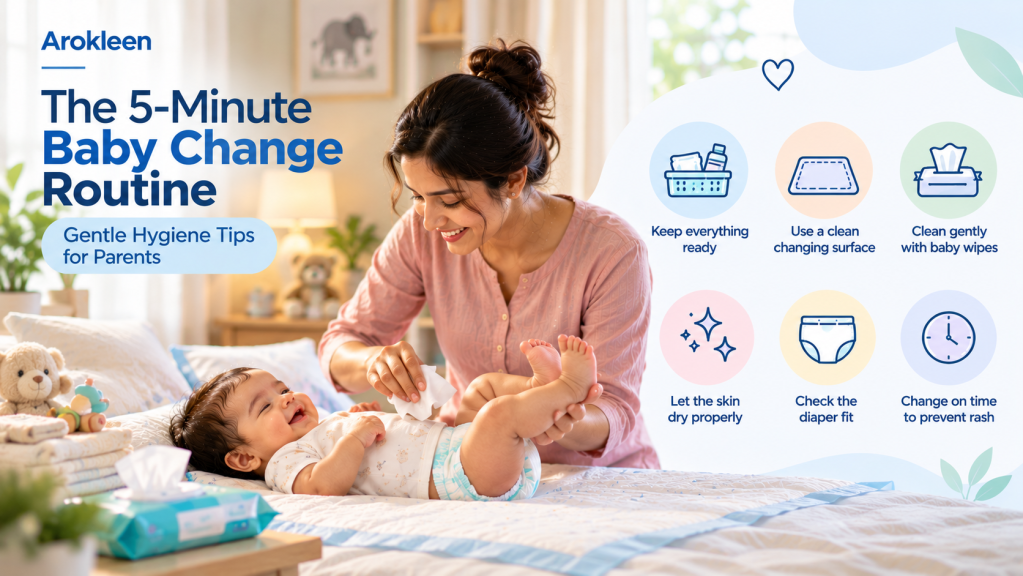
Changing a baby may look simple, but every parent knows it can quickly turn into a small daily challenge.
One moment the baby is calm. The next moment there is a leak, a restless kick, a wet sheet, or skin that looks slightly red. For new parents especially, baby hygiene can feel like something that needs constant attention.
The good news is that a good changing routine does not have to be complicated. A few simple steps can help keep your baby clean, dry, comfortable, and less irritated through the day.
This is where the 5-minute baby change routine helps.
It is not about rushing. It is about keeping everything ready, cleaning gently, protecting the skin, and making every diaper change calmer for both the baby and the parent.
Why Baby Changing Needs a Gentle Routine
A baby’s skin is delicate, especially around the diaper area. Wetness, stool, rubbing, tight diapers, or delayed changing can make the skin look red, sore, or uncomfortable. Health guidance commonly recommends keeping the diaper area clean and dry, and changing wet or soiled diapers promptly to help prevent diaper rash. Mayo Clinic
Many diaper problems happen not because parents are careless, but because the routine becomes rushed. Supplies are not ready, the baby moves too much, the diaper area is not dried properly, or a small leak spreads onto the bed or changing surface.
A simple routine helps avoid that chaos.
Step 1: Keep Everything Ready Before You Start
Before opening the diaper, keep all essentials within reach.
You may need a fresh diaper, baby wipes or cotton, a soft towel, baby under sheet or changing mat, disposal bag, clean clothes, and diaper cream if advised or already part of your routine.
This matters because babies should never be left unattended on a raised changing surface. If something is missing, it is better to carry the baby with you than leave them alone even for a few seconds.
A prepared changing space makes the process safer, calmer, and faster.
Step 2: Use a Clean Surface Every Time
A clean changing surface is important, whether you are changing the baby on a bed, mat, table, or while travelling.
Using a baby under sheet or disposable changing sheet can help protect the surface from sudden leaks, especially during nighttime changes or after feeding. It also makes clean-up easier when the diaper change gets messy.
This is useful at home, but even more helpful when you are outside, visiting someone, or travelling.
A clean surface also helps the baby feel more comfortable and gives the parent more confidence while changing.
Step 3: Clean Gently, Not Harshly
During every diaper change, clean the diaper area gently. Avoid rough wiping, especially if the skin already looks red or sensitive.
For pee-only changes, gentle cleaning may be enough. For stool, clean more thoroughly and carefully. Wiping from front to back is commonly recommended, especially for baby girls, to help reduce the chance of spreading germs. nidirect
Soft baby wipes can be useful when water is not convenient, especially during night changes or travel. The key is to use light pressure and avoid repeated rubbing.
If the skin looks irritated, be extra gentle. In some cases, using water and a soft cloth may feel more comfortable for the baby.
Step 4: Let the Skin Dry Before the Fresh Diaper
This is a small step many parents miss.
After cleaning, the diaper area should be dry before putting on a fresh diaper. Moisture trapped under a diaper can make the skin more uncomfortable. Mayo Clinic and NHS guidance both highlight keeping the diaper area clean and dry as an important part of preventing or managing diaper rash. Mayo Clinic
You can gently pat the area dry with a soft cloth or allow a short air-dry moment if the room is warm enough.
Do not rub. Patting is enough.
Step 5: Check the Diaper Fit
A diaper should fit securely, but it should not feel tight.
If it is too loose, leaks may happen around the waist or thighs. If it is too tight, it may leave marks and feel uncomfortable. The baby should be able to move their legs freely.
Check the leg openings and waistband after fastening. Make sure the diaper is sitting properly and not folded in a way that may cause leakage.
If leaks are happening often, the baby may need a different size, better fit, or more frequent changing.
Step 6: Change Quickly After Wetness or Stool
A full diaper should not stay on for too long. Wetness and stool can irritate the skin when left in contact for long periods.
Parents cannot always change instantly every single time, but the goal should be to change wet or dirty diapers as soon as reasonably possible. The American Academy of Dermatology also recommends changing dirty diapers quickly as an important step for preventing and treating diaper rash. American Academy of Dermatology
This is especially important after stool, during hot weather, or if the baby already has redness.
Step 7: Use Diaper-Free Time When Possible
A few minutes of diaper-free time can help the skin breathe, especially if there is mild redness or discomfort.
Place the baby safely on a clean under sheet or towel and allow some air exposure. This should only be done when the baby is comfortable and the room temperature is suitable.
Diaper-free time is not always practical, but when it is possible, it can be a simple way to reduce trapped moisture.
What to Do During Night Changes
Night changes should be calm and simple.
Keep wipes, diapers, under sheets, and disposal bags near the bed. Use soft lighting instead of bright lights so the baby does not fully wake up. Clean gently, change quickly, and avoid too much stimulation.
A baby under sheet can be very helpful at night because leaks are more stressful when everyone is tired. It protects the mattress and reduces the need for full bedsheet changes.
The goal at night is not perfection. The goal is to keep the baby clean, dry, and settled.
Signs Parents Should Not Ignore
Mild redness can happen, but some signs need more attention.
Speak to a doctor or healthcare professional if the rash is severe, does not improve after a few days of home care, becomes painful, has blisters or pus, or if the baby has fever or seems unusually uncomfortable. Mayo Clinic notes that medical advice is needed when diaper rash does not improve after a few days of home treatment. Mayo Clinic
Parents should also seek help if the baby cries during urination or stool, or if the skin looks swollen or broken.
A Simple 5-Minute Checklist
Before starting, keep everything ready.
Use a clean changing surface.
Clean gently without harsh rubbing.
Pat the skin dry.
Check diaper fit around the waist and thighs.
Dispose of the used diaper properly.
Wash or sanitize your hands after changing.
Small steps, repeated consistently, make baby care easier.
Final Thoughts
A baby changing routine is not only about replacing a diaper. It is about comfort, hygiene, skin protection, and peace of mind.
The best routine is simple: keep supplies ready, clean gently, dry properly, change on time, and protect the surface from leaks.
For parents, this makes everyday care less stressful. For babies, it means cleaner skin, better comfort, and a calmer changing experience.
A good diaper change may take only a few minutes, but it can make the whole day feel easier.